
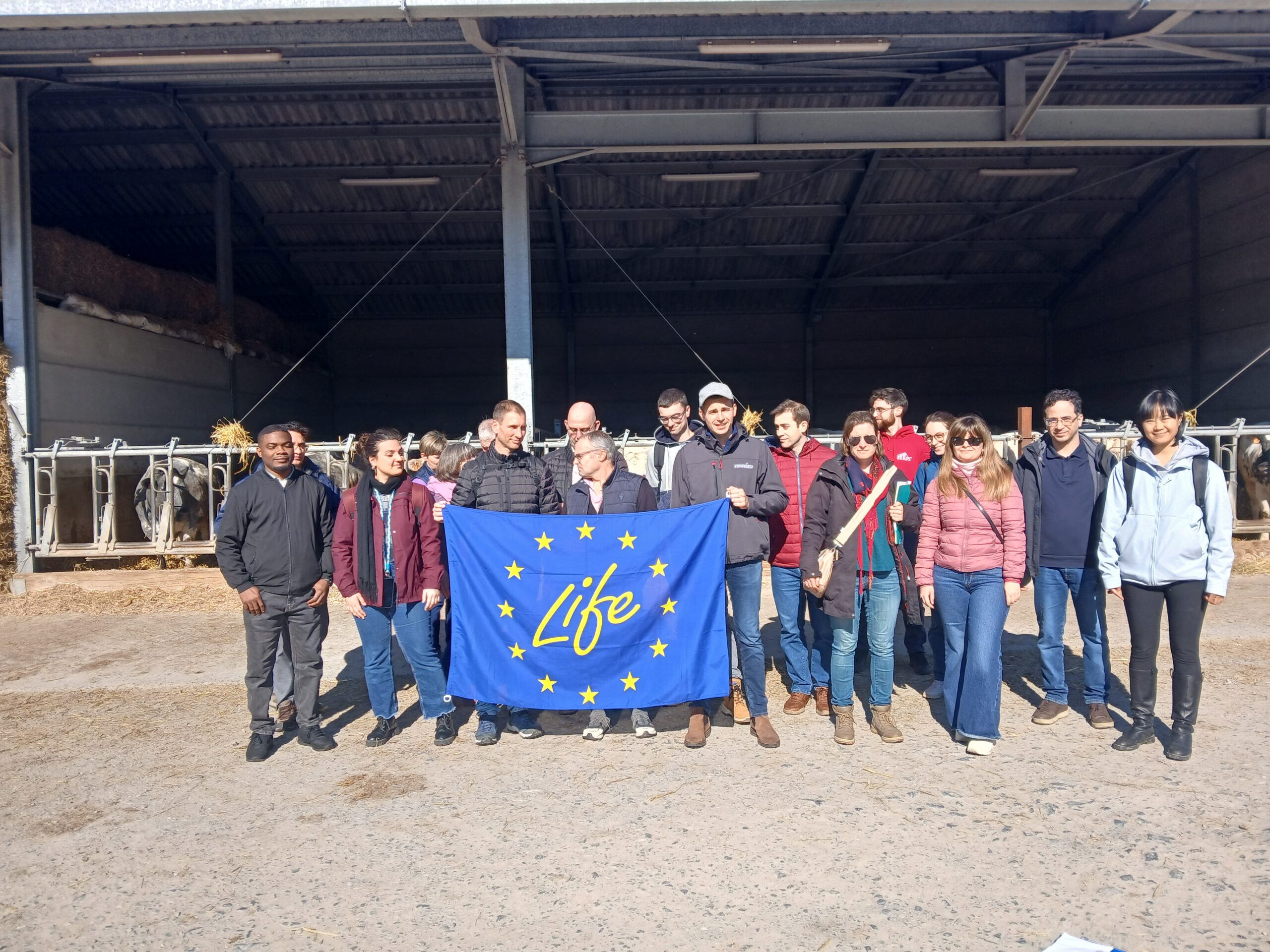

In March 2026, the University of Liège welcomed its European partners from 2 to 4 March 2026 at the Centre des Technologies Agronomiques in Strée (Modave) for the 4th meeting of the European partners involved in the project.
The morning of 2 March was dedicated to a meeting between project partners to review the project’s progress, challenges, achievements, and next steps.
On the afternoon of 2 March, a meeting focused on the CRCF (Carbon Removals and Carbon Farming Certification Framework) was held. Several guest speakers contributed:
- Valeria Forlin from the European Commission – DG Climate Action presented the latest developments regarding the CRCF within the Commission.
- Anaïs L’Hôte (Idele, coordinator of the LIFE Carbon Farming project) and Marc Rosiers (MR F&A Consult, member of the Rewarding Mechanisms Working Group within the European Climate Farm Demo project) focused their presentations on the methodological challenges and key issues associated with including livestock emissions in the voluntary carbon removals certification framework. This inclusion has not yet been validated by the European Commission but must be reviewed no later than 31 July 2026.
- Two representatives of agricultural cooperatives, Adrien Paquet (Les Élevages Belges) and Benoît Billa (En Direct de mon Élevage), shared their practical field experience and discussed the opportunities and implications of the CRCF developments for their sector.
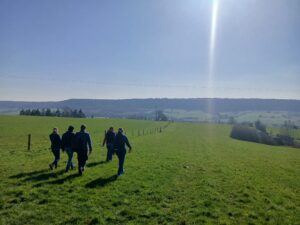
Following the meeting, participants were invited to visit the Centre des Technologies Agronomiques, a pilot farm within the LIFE Carbon Farming project.
Farm Visits (3–4 March)
3 March – Beef Cattle Farm of Mr. André Willem
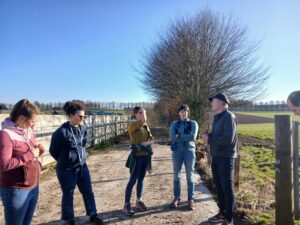
On 3 March, participants were welcomed by Mr. André Willem and his wife at their Belgian Blue beef cattle farm located near Dinant.
The farm has a utilised agricultural area (UAA) of 180.2 hectares, including 60.9 hectares of forage land (temporary and permanent grasslands, and silage maize). Cereals, sugar beet, and potatoes are also grown on the farm.
The farm raises 133 Belgian Blue suckler cows. Young cattle are sold at approximately 18 months of age after finishing, while some animals are also marketed for breeding purposes.
Carbon Plan Objectives
- Reduce age at first calving by 2 months
- Reduce calving interval to 400 days
- Reduce the number of young stock (from 205 to 173 livestock units)
- Increase the use of shallow tillage practices
- Produce electricity on the farm
3 March – Dairy Farm of Mr. and Mrs. Meurs
On the afternoon of 3 March, participants visited the dairy farm of Mr. and Mrs. Meurs near Gembloux, which includes around 70 lactating cows.
Mr. and Mrs. Meurs moved into their brand-new farm buildings in 2025. The farm covers 206 hectares of utilised agricultural area, including 70 hectares of forage land (temporary and permanent grasslands and silage maize). Cereals, sugar beet, and potatoes are also cultivated.
The herd consists of 62 Holstein dairy cows. This highly modern farm relies extensively on automation, including milking and feeding robots.
Carbon Plan Objectives
The construction of the new barn has significantly improved animal welfare and increased milk production. Grazing will be progressively introduced. The planting of hedgerows is planned, along with the modernization of manure spreading equipment.
4 March – Limousin Beef Farm of Mr. Cailteux
On 4 March, participants visited Mr. Cailteux’s organic Limousin beef cattle farm near Arlon.
The farm covers 177 hectares of utilised agricultural area, of which 91% consists of permanent and temporary grasslands. The animals graze for 225 days per year. Their diet is predominantly grass-based (97%), enabling the farm to achieve 97% protein self-sufficiency.
Agroforestry plays a significant role in the farm’s activities, with 272 trees and 18,434 linear metres of hedgerows. The hedgerows are valorised as wood chips for heating. Apple juice is also produced and sold on the farm.
Carbon Plan Objectives
The farm’s carbon strategy focuses on optimizing herd management by:
- Reducing age at first calving
- Decreasing the number of young stock
Additional objectives include further developing agroforestry by increasing the number of trees to 1,000 and planting more hedgerows.
4 March – Dairy Farm of Mr. Grandjean
On the afternoon of 4 March, participants were welcomed by Mr. Grandjean at his dairy farm located in Gouvy.
The farm’s 104.5 hectares of utilised agricultural area are entirely dedicated to forage production, including permanent and temporary grasslands and silage maize.
The dairy herd consists of 140 Holstein cows. The farm operates three milking robots. The animals’ diet is largely grass-based, with grass accounting for 57% of the ration. By-products from a nearby brewery are also incorporated into the feed. Mr. Grandjean has chosen to continue grazing, with cows spending 182 days per year on pasture during the daytime.
An on-farm anaerobic digestion unit produces 30,000 kWh of energy annually, helping offset the farm’s high electricity consumption associated with automation (three milking robots and a feed-pushing robot).
Carbon Plan Objectives
- Improve cow comfort, with positive effects on productivity
- Reduce the herd replacement rate (currently 25%)
- Introduce mixed cereal-legume crops (méteil) to increase feed self-sufficiency
- Improve temporary grassland management
- Optimize nitrogen fertilization practices
For more information:
https://youtu.be/JAx6LkUqyK0?si=FFMaMp7Qk-IjEJRF
 This project is co-funded by the LIFE Programs of the European Commission


